MARTINA RINK.
About Martina Rink
I work with women who have arrived somewhere and are not entirely sure it is where they intended to go.
Private mentorship for high-achieving women whose outside life resolves on paper, but quietly no longer feels like their own.
Spiegel bestselling author · Founder of The Sober Muse · Former assistant to Isabella Blow · Featured in Vogue Germany
Private · Confidential · By application


About
I am interested in the distance between how a woman appears — and how she actually feels inside her own life.
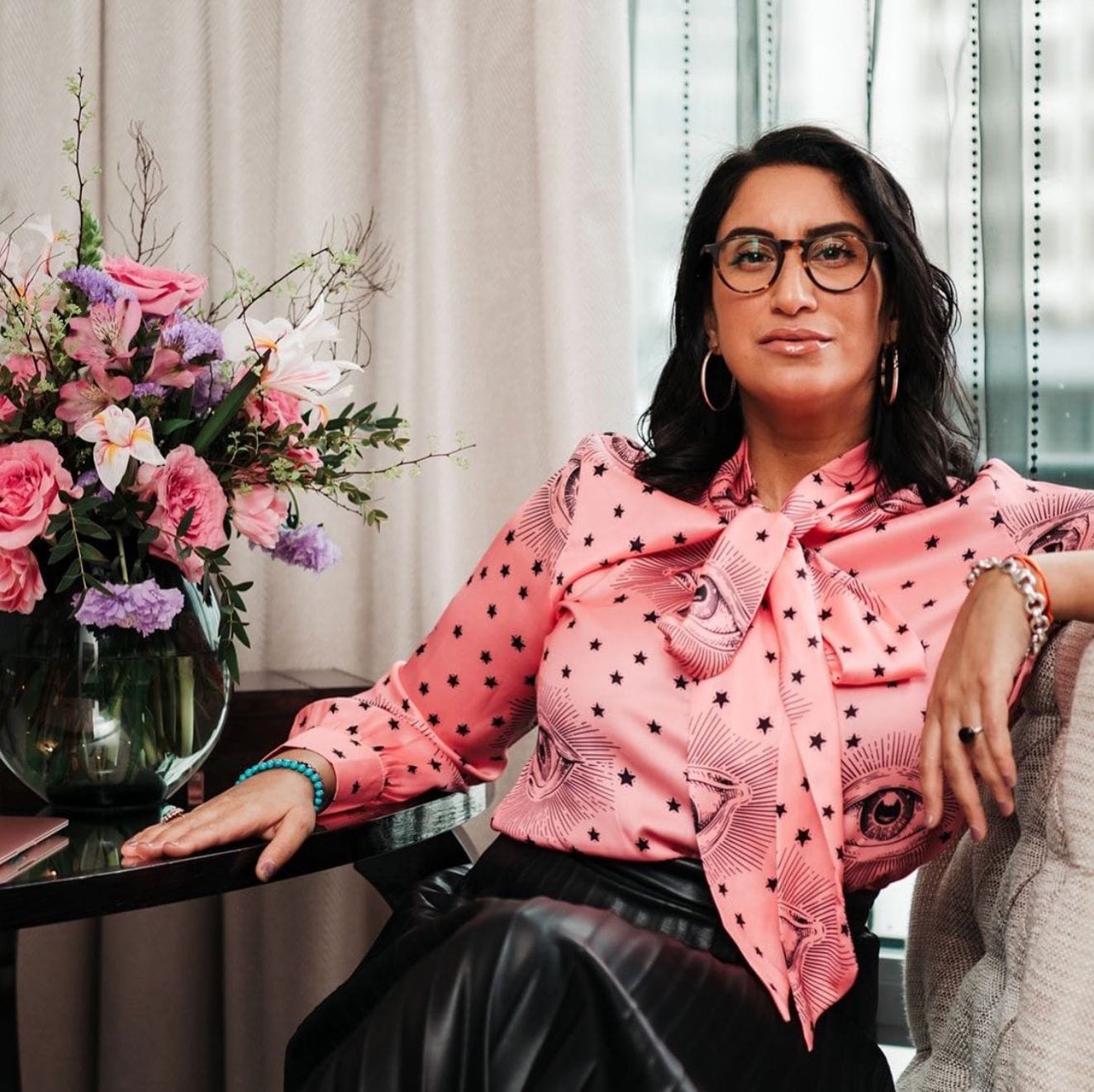
I am Martina — a Female Empowerment Coach, Sober Conscious Mentor of The Sober Muse, a Spiegel bestselling author, and a creative.
My story has been shaped by Persian roots, adoption, and a life lived between Germany, London, Paris, and Ibiza — experiences that shaped my understanding of identity, belonging, and inner strength.
For many years I moved within the international fashion and creative industry, where success, beauty, image, and strength were often visible on the surface — while emotional exhaustion remained carefully hidden underneath.
I witnessed this in other women.
And I lived my own version of it.
Behind a life that looked accomplished, I was navigating anxiety, depression, social phobia, and a relationship with alcohol that had quietly become something I could no longer ignore.
Choosing sobriety became a profound turning point. It was the moment I stopped running from myself. This is where my work was born — not from theory, but from lived transformation.
I did not want a programme. I wanted a conversation — precise, private, conducted between equals. I did not find one that felt right for me, so I built it.
Today I work primarily with high-achieving women, creative entrepreneurs, founders, and visionaries who are ready to release old patterns, reconnect with themselves, and create a more conscious, sober, and aligned life.
My work is my calling: to create spaces where women no longer have to lose themselves in order to succeed, be loved, be admired, or belong. Spaces where they can return to who they are — with greater awareness, emotional freedom, and genuine inner strength.
MartinaAuthor · Mentor · Ibiza · Berlin · London · International
If this feels familiar, begin with the private assessment.
I have always known what it is to inhabit a life that was not quite built around you.
— Martina Rink
As featured in
Vogue GermanyDer SpiegelDie ZeitSpiegel Bestseller

The years before
Before the practice.
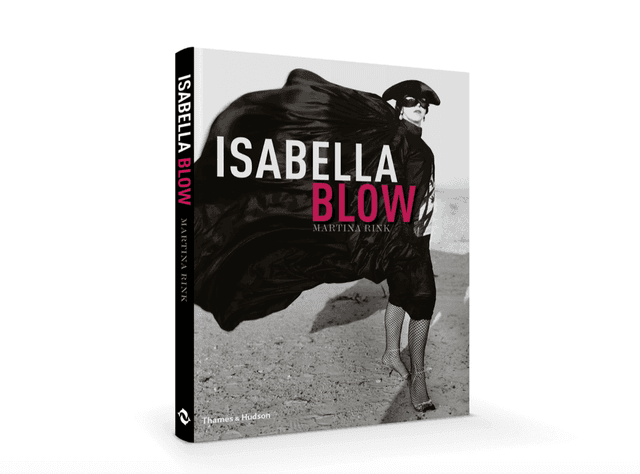
I spent several formative years working as personal assistant to Isabella Blow in London. Isabella was, by any reasonable account, one of the most extraordinary women of her generation — a creator, an instigator, a woman who lived entirely from her own vision.
What I observed, working closely with her, was something that I have spent the years since trying to articulate: the particular cost of being fully, unapologetically yourself in a world that finds that either inconvenient or consumable. The commitment to one’s own interior, even when the exterior is being dismantled.
It was an education that no institution offers.
Isabella collected people the way she collected hats — with absolute precision, and an instinct for who could carry weight. She placed McQueen, Treacy, the entire generation. What I learned was not how to be like her. It was how to read a room the way she read it.
— Martina, on her years at Isabella Blow’s side, London 2004–2007
The work before the work.
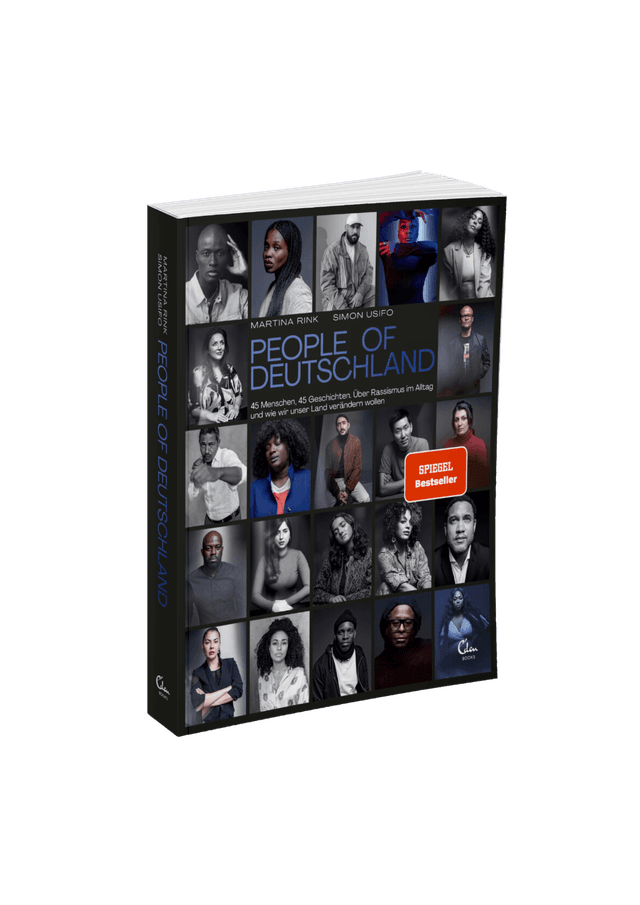
I have published three books: Isabella Blow (a Spiegel Bestseller, written from unique proximity as her personal assistant), People of Deutschland (a documentary portrait of contemporary Germany, covered extensively in national media), and Fashion Germany.
I mention this not as a credential list, but because context matters: the women I work with are at a level where they need someone who has operated in complex, high-visibility environments — and who has written, publicly and carefully, about what those environments cost.
My practice draws on formal training across coaching, NLP, hypnotherapy, sobriety consulting, Transcendental Meditation, and Ayurveda — each chosen not for its certificate but for what it adds to the room. The sobriety work operates under a distinct name: The Sober Muse. A private method, built from the inside.

The clinical knowledge.
For Sober Muse clients, I maintain a close professional relationship with Mrs. Nürnberger, Head Physician at the My Way Betty Ford Clinic — one of Germany’s leading addiction clinics. She was formerly my own doctor, and has since become a trusted advisor to this work.
For Female Empowerment & Leadership clients, I work closely with Dr Tim Ojo, a Consultant Psychiatrist with over thirty-one years’ experience in mental health, practising in Brighton & Hove and on Harley Street, London. He is Director of EKO Consulting, and where his authority on leadership, conflict, and workplace wellbeing serves the work, I bring him in.
The methods I use were shaped through that experience. What I bring is not theory — it is a framework I have lived, tested, and refined over six years of practice with women navigating the same question.
Why women come
The situation is usually recognisable before the words are.
A founder who has exited successfully and cannot understand why the arrival feels nothing like she imagined. The metrics are right. Something else is not.
A senior executive at the top of the right career who has quietly begun to suspect it may be the wrong mountain. The question is not what to do next. It is who she is without the title.
A woman who has been re-examining her relationship with alcohol — not dramatically, not in crisis, but with the growing clarity that one chapter has ended and she has not yet found the language for what comes next.
I work with a small number of women at a time. Privately.
Work with me privatelyMartina doesn't coach you toward an answer. She asks the question you didn't know you were avoiding — and then she waits. That quality of attention is genuinely rare.
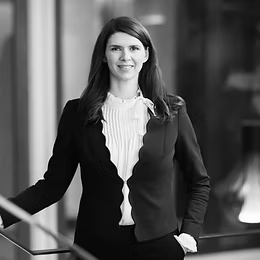
Anja — Founder & Digital Business Consultant
Accreditations
International Association of Coaching Institutes
International Association of NLP Institutes